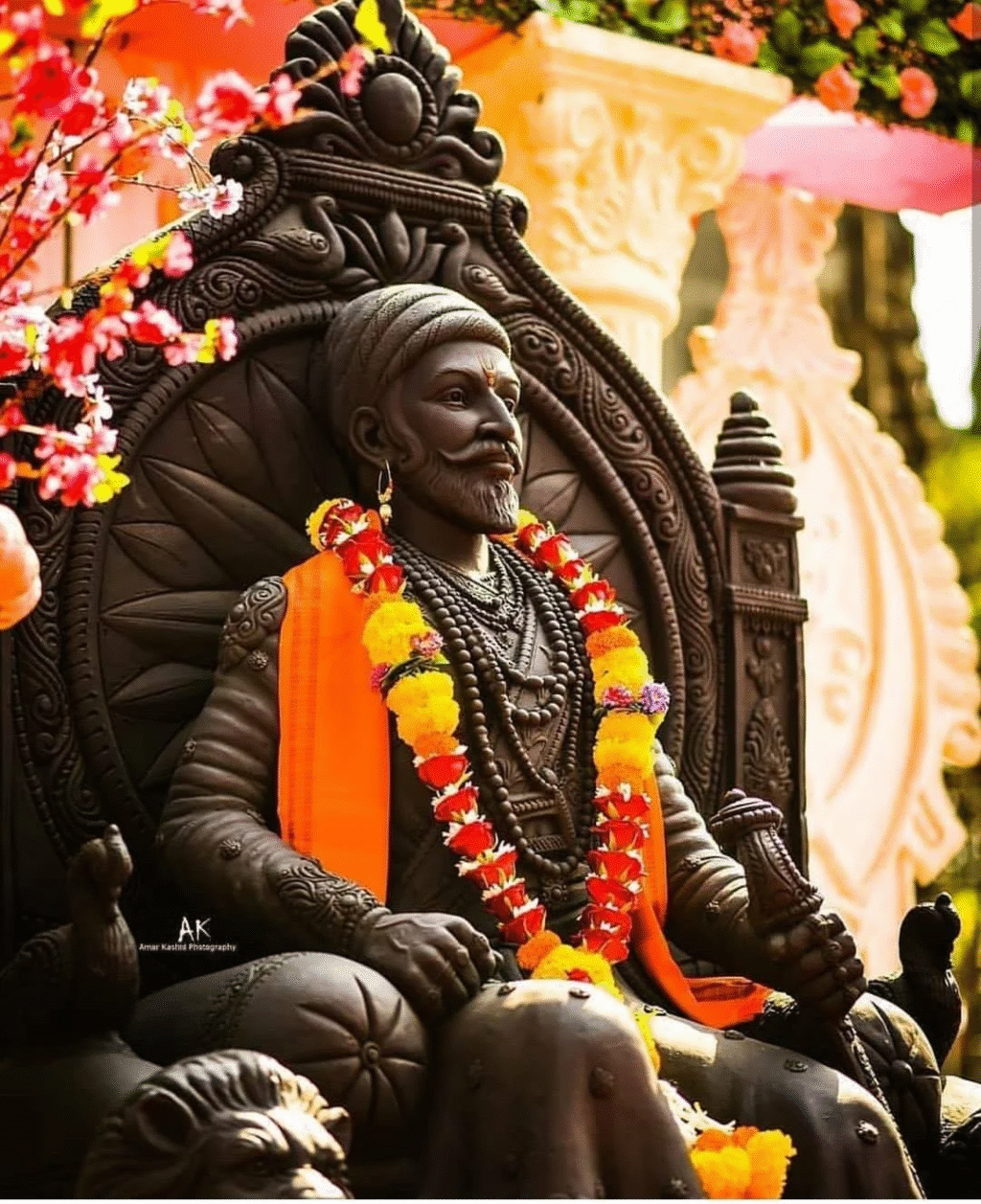
Chhatrapati Shivaji Maharaj is known to be the greatest king in Indian history, but the story of his forefathers is very interesting. Before the rise of the Maratha Empire, which Shivaji would go on to lead, his family, the Bhonsle clan, had been developing a legacy of courage, struggle and ambition over generations. This background of the family tree, in turn, gives us a better picture of how we see the great warrior king Shivaji.
The Bhonsle Clan: Roots of a Warrior Family
Shivaji Maharaj was born into the Bhonsle clan, which was a prominent Maratha family from the Deccan region. Through the centuries, the Bhonsles won a reputation for military skill and administrative ability. While the family reported to be of the Sisodia dynasty background out of Mewar, a royal Rajput line, many scholars put forth that the Bhonsles, in fact, were of Maratha agrarian-warrior origin, which they rose in the political structure through their skills in leadership and bravery.

The Bhonsles were known for their determination, an unyielding spirit, and a deep sense of identity, which in turn shaped Shivaji’s character.
Early Ancestors: From Village Leaders to Fort Commanders
From the time of Babaji Bhosale, we see the story of Shivaji’s ancestry come into focus. Babaji was a village headman (patil) in the Pune area, which used to bring him local influence and respect. It was through his leadership that the family began its rise.
Babaji’s son Maloji Bhosale brought a change. Born in 1552, Maloji rose through the ranks to become a very respected commander. His loyalty and success in battle won him land grants, estates, and control over key forts, which included the famous Shivneri Fort, at which Shivaji was later born. Also, he put in place the Bhonsle tradition of military service to Deccan rulers, which they, in turn, recognised and which grew to be a far-flung reputation beyond the borders of his homeland.
Maloji’s brother, Vithoji Bhosale, also served as a warrior, which proved that courage was in the blood of the family.
Shahaji Bhosle and Jijabai: The Most Influential Figures in Shivaji’s Immediate Lineage
Maloji’s son Shahaji Bhosle, who we see as the main player in the fate of our clan. As a talented and ambitious general, Shahaji navigated the complex political games of the Deccan with skill. Through his military genius, he protected the family’s territories in very unstable times.
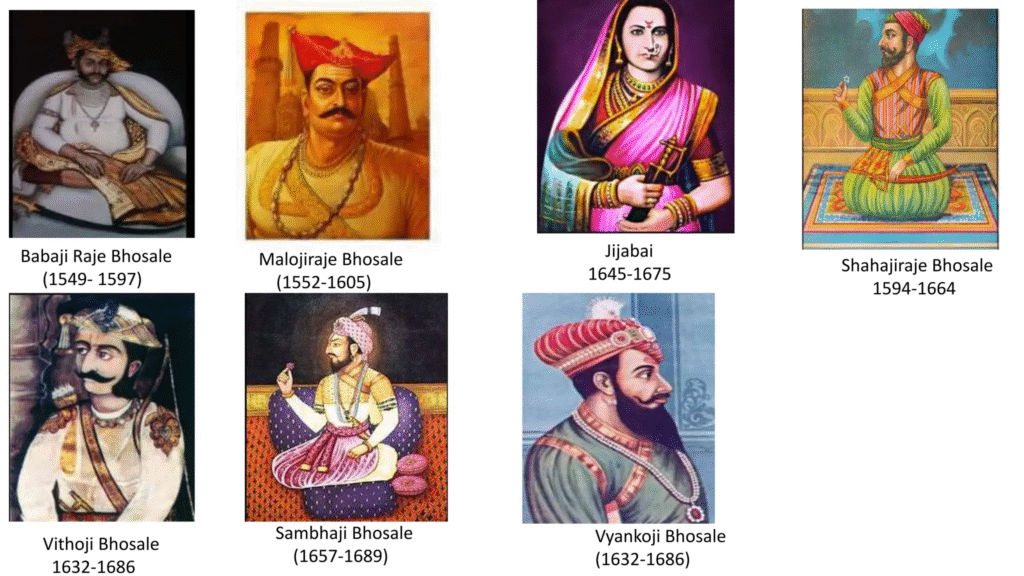
Shahaji wedded Jijai, who at the time was a woman of great wisdom, devotion and strong will. She brought up Shivaji in a very cultural and spiritual setting, which instilled in him the values of bravery, justice and love for the homeland. Also, while Shahaji was out on military duties, a great amount of the responsibility of raising Shivaji fell on Jijai’s shoulders, which in turn helped to instil in him discipline, self-respect and a dream of independence.
In 1630, Shivaji was born at Shivneri Fort, which was the start of a revolution.
The Debate: Rajput Royalty or Maratha Homeland Warriors?
At the time of Shivaji’s coronation in 1674, the Bhonsles were recognised to be of Sisodia Rajput descent. This gave the Bhonsles royal legitimacy in a lineal background that played great political importance. But some present-day historians put forth that the Bhonsles, in fact, were former Marathas, who rose to power due to merit rather than from old royal blood. A family that transformed struggle into strength and then into an empire.
A Legacy That Built a Kingdom
From village leaders to sardars, from feudal landowners to nation builders, the Bhonsle family rose through grit, war, loyalty and vision. Shivaji was born into a legacy not just of land or a name but of a culture of perseverance, courage and pride which spanned centuries. He, in turn, took that heritage and turned it into Swarajya, a nation of self-rule and dignity.