
Chhatrapati Rajaram Maharaj, the second son of the great Maratha ruler Chhatrapati Shivaji Maharaj, had a key role in the preservation of the Maratha Empire during one of its most trying times. Although he is sometimes put in the shadow of other Maratha rulers, his courage, resilience, and strategic leadership made for the survival and, in fact, the eventual rise of Maratha power. It is a tale of determination against all odds.
Early Life and Background

Rajaram Maharaj was born on 24 February 1670 at Raigad Fort. Son of Shivaji Maharaj and Soyarabai. Born into a world in which he grew up watching his great father’s political and military games, Rajaram also lived through constant Mughal threats.
After the death of Shivaji Maharaj in 1680, there was an unstable time. Rajaram’s brother Sambhaji took over, but the Mughal emperor Aurangzeb increased his attacks on the Marathas. These chaotic early years formed Rajaram’s view of leadership and warfare.
Challenges After Sambhaji Maharaj’s Death
In 1689, Sambhaji Maharaj fell into the hands of Aurangzeb and was put to death. This was a great defeat for the Maratha Empire. As the Mughal forces pressed on and Maratha strongholds fell one by one, the Marathas required a leader who would keep the resistance alive.
At the age of only at nineteen, Rajaram Maharaj was made the next Chhatrapati. His coronation was at Raigad, but with Mughal armies surrounding the fort, he had to retreat to the stronghold of Gingee Fort in Tamil Nadu. That escape in itself became a symbol of the Maratha spirit; we retreat only to rise stronger.
The Gingee Resistance
Gingee Fort saw the height of Maratha resistance under Rajaram Maharaja. From 1689 to 1698, he ran Maratha operations out of that distant fort. Although far from Maratha core areas, Rajaram still inspired his commanders and masterminded coordinated attacks in Maharashtra and Karnataka.
During this time, legendary Maratha generals like Santaji Ghorpade, Dhanaji Jadhav, and Ramchandra Pant Amatya led a guerrilla war, which wore out the Mughal forces. Rajaram’s leadership, which tied the Maratha movement together, also helped in the revival of their strength.
Return to Maharashtra and Reconstruction efforts.
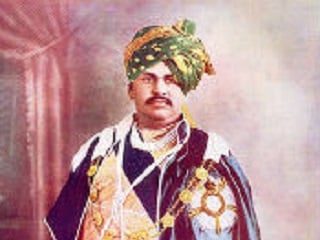
In 1698, Rajaram Maharaj managed to escape from Gingee and return to Maharashtra. Upon his return, he raised the morale of the Maratha commanders and the common people. For the next few years, he put effort into reorganizing the administration, strengthening forties, and reviving the confidence of local chiefs.
Although still under Mughal pressure, Rajaram brought stability and structure back to the Maratha Empire. He laid the base for a later resurgence, which was completed by his wife, Tarabai, and his nephew, Shahu Maharaj.
Personal Traits and Leadership Style
Rajaram Maharaj was a peaceful and smart ruler. In contrast to Shivaji and Sambhaji, who were very much into the field of battle, Rajaram’s strength was in strategy and organization. He was able to get the best out of his commanders and to sustain a resistance with what little resources they had.
He was very dedicated and responsible. In tough times, he also never left the Maratha cause and worked hard to protect his people.
Death and Legacy
Chhatrapati Rajaram Maharaj died on March 3, 1700, at Sinhagad Fort at the age of 30. At his death, which was a great loss, the system he had rebuilt survived. After him, his wife Maharani Tarabai took up the fight against the Mughals with great strength.
Rajaram Maharaj’s bequest is not to great conquests but to his tenacity. He kept the light of Swarajya alight in the deepest of crises and saw to it that the Maratha Empire did not break under Mughal pressure. His leadership set the stage for the Maratha expansion, which went on to dominate large parts of India.