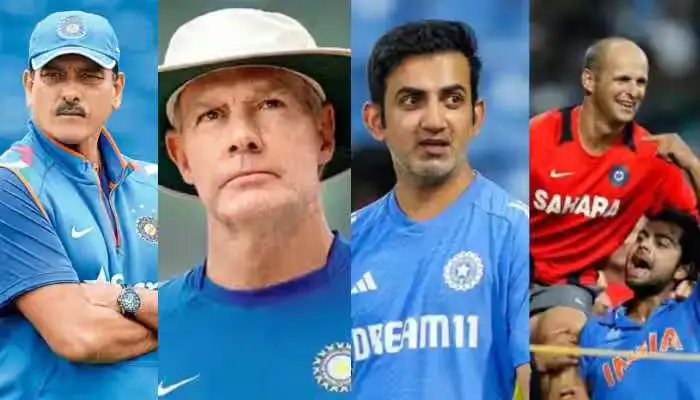
Indian cricket has seen great change from the 1970s into the present, which has seen the introduction of fitness, analytics, and more aggressive play. Although star players tend to be the focus, coaches also play a very important role in the development of India’s style of play, team approach, and strategic thinking. From a time when coaching was mainly for giving out direction and instilling discipline to today’s very advanced performance programs, the Indian cricket team has had a very interesting evolution.
Look at 17 Indian cricket team coaches from 1971 to 2026:
1. Keki Tarapore (1971-1972)
Keki Tarapore was at the forefront of those who took up the coach’s role when Indian cricket was still in the early stages of structure. He put in work to introduce systems into practice, which in turn improved team coordination.
2. Gulabrai Ramchand (1972–1974)
Ramachandran is known for his role in which India improved in terms of match discipline at the international stage. Inhis tenure, we saw the introduction of more planning sessions and work put into improving technique against that offast and spin bowlers.
3. Datta Gaekwad(1974 1975)
Datta Gaekwad played a large role at a time when Indian cricket saw success in individual player skills. He was involved in a project whose focus was to bring more team cohesion and better match performance.
4. Bishen Singh Bedi (1990)
A legendary player at the spin craft, Bedi brought to the team his vast cricket experience and what he had seen out on the field. In the coaching arena, he put forward a style which was that of skill development and the revival of the classic technique, very much so in bowling.
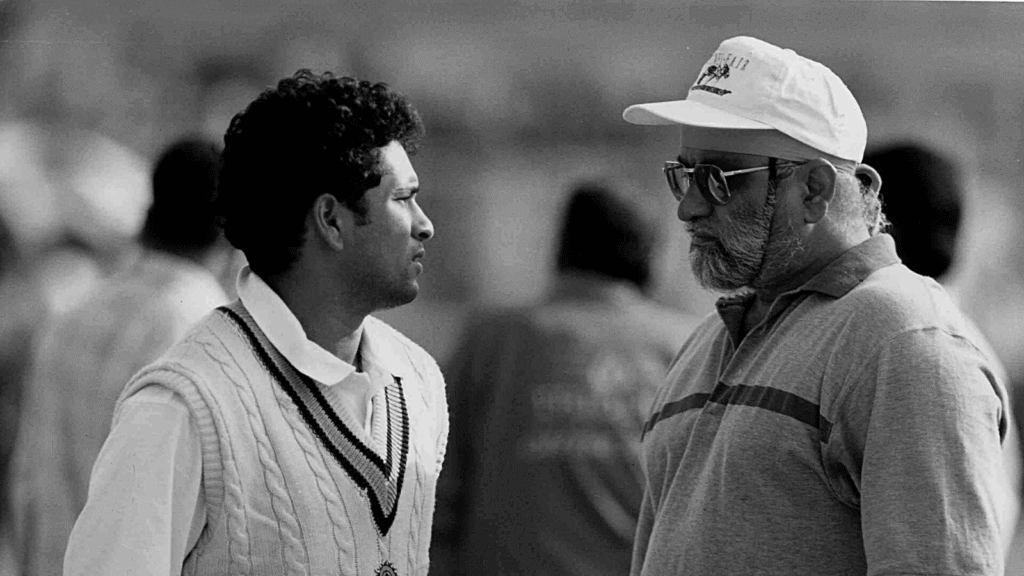
5. Chandu Borde served from 1991 to 1993
Chandu Borde is known for his role in the transition of Indian cricket. He played a key role in shaping batting discipline and also in improving the domestic-to-international bridge, which was very important.
6. Anshu Gaekwad (1997 1999, 2000)
Anshuman Gaekwad saw to it that India became a more stable unit, which in turn enabled better performance. In his time, which we are talking of, India put out better results at home as well as away.
7. Kapil Dev 1999-2000
India’s World Cup-winning skipper took to the role of coach with a focus on intent and confidence. Kapil’s strategy was to get players to believe in an attacking brand of cricket and to play without fear.
8. John Wright (2000-2005)
John Wright transformed the Indian cricket scene. His time brought in professionalism, structured planning, and saw an improvement in fielding, which many fans look back to as the base of present-day Indian cricketing thought.
9. Greg Chappell (2005–2007)
Greg Chappell’s time as coach was a very public phase in Indian cricket. Although there were issues that came to light, also of note was how he brought to the fore issues of fitness, performance accountability, and player roles.
10. Lalchand Rajput (2007–2008)
Lalchand Rajput managed India through a very tough reconstruction phase. He did a great job in the dressing room and also did what it took to keep the team united, which in turn saw India back into a winning mode.
11. Gary Kirsten (2008–2011)
Gary Kirsten is a very popular name for the atmosphere he created, which in turn allowed players to do their best.Under his watch, India grew into a better-performing team across all formats and also came out with great performances at big stages.
12 Duncan Fletcher (2011–2015)
Duncan Fletcher took a very methodical and structured approach. During his time in charge, we saw the implementation of long-term plans, a process-based performance model, and the steady development of young talent into solidinternational players.
13. Ravi Shastri (2014 as Director, 2017–2021 as Head Coach)
Ravi Shastri left his mark on a bold and brave Indian team. He led us to develop a very strong fast bowling group thatalso saw us improve our results away from home, which was especially true in the foreign, tough environments.
14. Anil Kumble (2016–2017)
Anil Kumble, during his coaching tenure was known for instilling discipline, hard work and attention to detail. He put in place a routine that improved fitness and mental strength, thus enhancing India’s competitive edge.
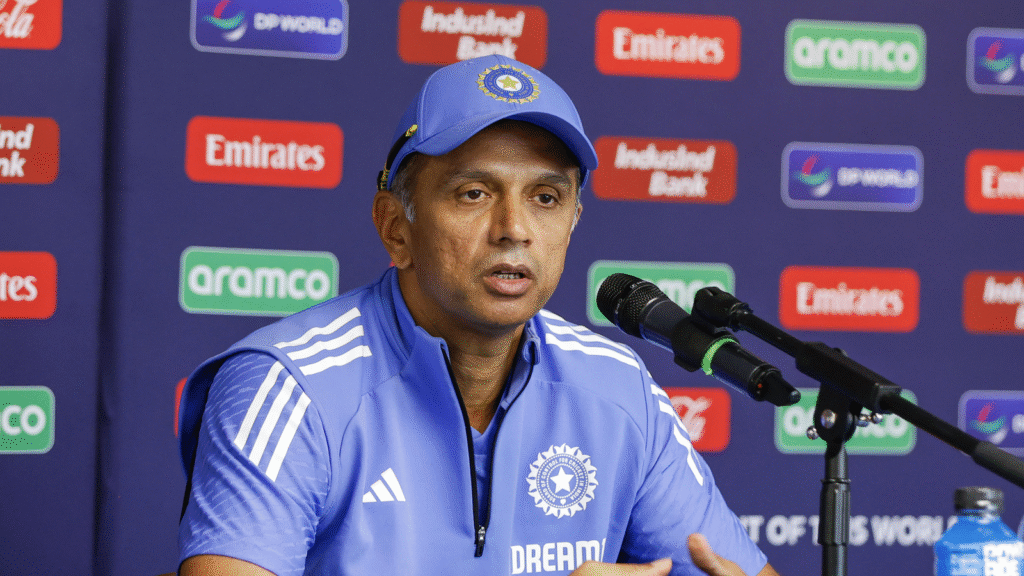
15. Rahul Dravid (2021–2024)
Rahul Dravid, as a coach, wore the same traits that defined him as a person: calm, patient, and very much a thinker.Also, he was a mentor to the young players, improved the depth of the Indian team, and kept alive the tradition of fitness and adaptability.
16. VVS Laxman (Interim Coach – Various Tours)
VVS Laxman did a good job at the role of interim coach, which he filled with stability and in-depth knowledge of our players. He brought about a smooth transition and continuous improvement during his time.
17. Gautam Gambhir (2024–Present)
Gautam Gambhir has brought in a new coaching staff that is very intense and competitive. His coaching, which we see as a step towards greater aggression, stronger team unity, and a more fearless approach in the game, is very much present in high-pressure tournaments.
Indian Cricket Coaches Through The Years
Indian cricket coaching in the 1970’s was, for the most part, based on experience, discipline, and technical know-how. Over the years, coaching became more professional and in detail, which included fitness regimes, scouting reports, video analysis, and strategic planning. Today’s Indian setup has many specialists in it, which include batting coaches, bowling coaches, fielding coaches, strength trainers, and mental conditioning experts.
Extra Insight: Why Coaching is More Important Today than Ever Before
In present-day cricket, a coach is a doer of many things beyond that of a trainer; they are also a manager, motivator, and strategist. With packed schedules, multiple formats, and intense media pressure, coaches help players to stay mentally strong and focused. Also, it is in the coaches’ great hands to play a key role in team selection, which includes putting inroles like “finisher”, “powerplay specialist”, or “death-overs bowler”, and in turn in the building of a winning culture across all formats.
Conclusion
From the time of Keki Tarapore in 1971 to the mid-2020s, which saw Gautam Gambhir out, Indian cricket had many a coaching personality that put their stamp on the team. Each age brought with it different sets of challenges, and each coach left a legacy of discipline, of professionalism, of confidence, of aggression. As a group, these 17 coaches tell the tale of Indian cricket’s evolution and also how off-field leadership has been as important as on-field performance.