Know Around the Cheras Kingdom
Introduction
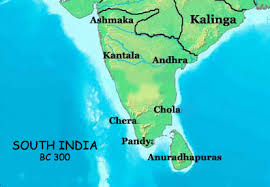
The Cheras were one of the most punctual and most persuasive old lines of South India. Of Tamil root, they ruled expansive parts of present-day Kerala and western Tamil Nadu. Along with the Cholas and Pandyas, the Cheras shaped the celebrated “Three Delegated Kings” of the Tamil Sangam age. Their history ranges over a thousand a long time, separated broadly into the Early Cheras (Sangam period) and the Afterward Cheras (Moment Chera Empire).
Origin and Territory
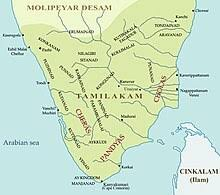
The Chera kingdom developed in districts that had been occupied since ancient times. Their center region lay in Kerala, extending from Kanyakumari in the south to Kasargod in the north, with impact expanding into zones like Coimbatore, Salem, and Palakkad. Old borders were liquid, extending and contracting due to wars and unions. One of their vital capitals was Vanchi, recognized by numerous researchers as Muziris, a major harbour known to Roman traders.
Society, Religion, and Culture
Early Chera society was unmistakable from afterward Brahmanical frameworks. The caste framework was to a great extent missing, and there was no inflexible state religion. Genealogical adore was common, and Kottavai, a war goddess, was broadly respected. Sanctuaries as changeless structures were uncommon in the early period; instead, divinities were revered in open spaces, regularly beneath trees. Organized ministry got to be noticeable as it were after Brahmanical impact increased.
Art and writing thrived amid the Chera running the show, particularly in the Sangam age. Numerous Chera rulers were lauded by court writers, and their rules contributed luxuriously to classical Tamil literature.
Economy and Trade
Agriculture was the spine of the Chera economy, backed by ripe waterway valleys and storm downpours. The Cheras were too eminent for abroad exchange. Ports such as Muziris, Tyndis, and Nelcynda associated the kingdom with Rome, West Asia, and Southeast Asia. Flavors, pearls, valuable stones, and timber were major exports. Locally, businesses like angling, weaving, metalwork, carpentry, and salt generation were noteworthy sources of livelihood.
Early Cheras (Sangam Period)
The early Cheras ruled generally from the 3rd century BCE to the 3rd century CE. Their history is primarily recreated from Sangam writing, which claims lords like Uthiyan Cheralathan, Imayavaramban Nedum Cheralathan, and Senguttuvan. During this time, the kingdom regularly had two parallel administrative lines, making chronology complex. Clashes with the Cholas and Pandyas were visit, and by the 3rd century CE, Chera control continuously declined.
Later Cheras (Moment Chera Empire)
The Cheras re-emerged around the 9th century CE as the Kulasekharas or Perumals of Kerala. This stage was more organized and Brahmanical in nature. Mahodayapuram (Kodungallur) became the capital. Lords like Kulasekhara Alvar, Rajasekhara Varman, and Bhaskara Ravi Varman ruled during this period. In spite of social and commercial development, nonstop wars with the Cholas debilitated the kingdom.