Taco Bell, which is a large-scale player in the global fast food field, has created a large footprint in the quick service restaurant (QSR) sector with its unique Mexican-focused menu. The brand born out of Glen Bell’s 1962 venture in California has indeed become a giant on the world stage. In India, what we are seeing is rapid growth for the brand that is also drawing in investors and entrepreneurs into what is a growing food-based business. In this report, we present a very in-depth look at the Taco Bell franchise cost, investment numbers, and return on investment (ROI) in 2025..
Taco Bell’s Business Strategy Overview.
Taco Bell has a primary focus on the franchise model, which puts out its brand to the public. We see a range of franchise options that the company provides for different investments and locations, from single standalone drive-thrus to those in malls and high street locations.
In India, Taco Bell is run by Burman Hospitality Pvt. Ltd., which is the master franchise partner in charge of the brand’s growth across the country. They present a diverse menu which weaves in global and local flavors, which in turn is what the young and urban Indian crowd is into, thus making it a great business play in the quick service restaurant segment.
Franchise Cost and Investment Requirements
In 2025, we see that the total investment for a Taco Bell franchise’s opening is a variable that depends on the restaurant’s size, format, and location. Also, it is expected that the total capital investment for these will range between ₹3 and ₹5 crores. We break down the main cost elements as follows:.
- Franchise Expenses:
When an investor pays a franchise fee of ₹25 to 35 lakhs, Taco Bell is also giving the rights to the systems, recipes, and training that it has developed, as well as the brand name.
- Infrastructure and Setup Fees:
In addition to other costs, the expense to construct a full-service Taco Bell restaurant includes furnishings, fixtures, signage, kitchenware, and interior design, which generally run between ₹1.8 and 3 crores, depending on the type and size of the restaurant.
- Real Estate and Leasehold Improvements:
As well, we ask for a minimum of 1,000 – 2,500 square feet in value, preferably in a high-traffic area like a mall, financial district, or along a highway. Rental deposits and improvements under leasehold will also cost ₹50 lakhs to 1 crore extra.
- Working Capital and Licensing:
Entrepreneurs then think about pre-opening costs such as working capital, training money for employees, and licensing, which can add up to ₹20 – 40 lakhs.
“When a restaurateur takes the plunge of a Taco Bell franchise in India, their initial costs will run from ₹3 – 5 crore.”
Ongoing Costs and Royalties
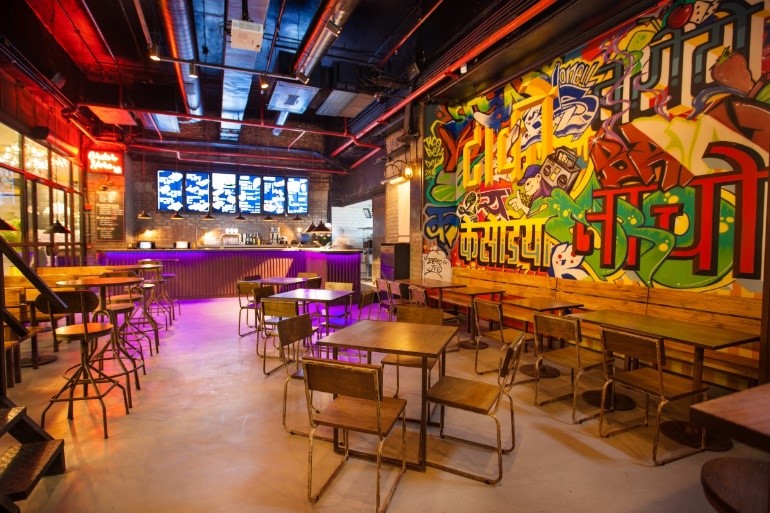
We have also found that restaurant franchisees are responsible for some monthly ongoing fees in addition to the initial investment.
- The royalty fee is approximately 5.6 percent of the total monthly sales.
- Approximately 4 to 5% of sales go toward marketing and advertising fees, which we use to fund promotions and brand-wide advertising campaigns.
These fees, which in turn provide for our franchisees’ continuous brand visibility and support.
In 2025, we see this for you.
In 2025, the QSR sector in India is expected to see double-digit growth, which in turn means great returns for Taco Bell franchises. Also, we see that a well-located Taco Bell outlet, on average, can get monthly revenues of ₹40 70 lakhs, which varies by city and foot traffic.
After accounting for operating expenses and royalties, the profit margin we see is between 12% and 18%. From this, we see an expected return on investment (ROI) of 3 to 4 years into the operation.
Also, in the case of Taco Bell, which has grown with the introduction of innovative menu items, improved digital ordering systems, and the use of apps like Swiggy and Zomato for delivery, which in turn has increased sales and franchise profit.
- Taco Bell supports that with training.
- Taco Bell provides its franchise partners with full support, and we see that they do.
- In-depth training of franchisee staff.
- In the fields of site selection and store design.
- Continuous marketing and promotional support.
- Regarding inventory, supply chain, and quality control.
This structure of support enables new entrepreneurs to do well in running their restaurants, which may not be a familiar territory for them.
Conclusion

In 2025, what we are seeing is a great chance for entrepreneurs to get into India’s growing fast-food sector by way of owning a Taco Bell franchise. Though the initial outlay is high, what the brand brings to the table in terms of global recognition, constant customer demand, and consistent profit growth makes this a very attractive long-term play.
In the right locations with smooth operations, and we see to it that we meet Taco Bell’s quality bars, investors may expect to see strong returns and also sustainable business growth in the years ahead.